Few things give a podcast as much personality as music. A good intro tells listeners who you are in seconds, and well-placed stingers set the pace. But it's also where most legal mistakes happen.
⚡ In 30 seconds
- Define a consistent sound identity and stick with it for the whole season.
- Every song is protected by copyright, even a short snippet.
- Only use licensed music and keep the paperwork.
- Less music usually means more clarity.
What is a sound identity?
It's what makes your show recognisable by ear: the intro music, stingers, effects and even the tone of your voice. Just as a logo defines a brand visually, these sounds define you every time someone listens.
Choose music that reflects the character of the show. A comedy podcast shouldn't sound like one about serious subjects. And settle on the style before you start.
Think about what you want someone to feel in the first ten seconds: energy, calm, curiosity, confidence. That emotion is your starting point when searching. Once you're clear on it, choosing between a hundred similar tracks becomes much easier, and the whole season will sound consistent.
Elements to define
Your sound kit
Intro theme
A short piece, ten to thirty seconds long, that opens each episode.
Close
A version of the theme that closes the episode and makes it more memorable.
Stingers
Very short snippets that separate sections or segments.
Background music
Soft and without vocals, to accompany the voice without drowning it out.
Sound effects
Occasional sounds for context or humour. Use sparingly.
⚠️ Watch out for this
Don't make the intro too long. Listeners want to get to the content: if it takes a minute before they hear a voice, many will leave.
Copyright: the part you can't skip
Every song is protected by copyright, even a short snippet. Using music by a well-known artist without permission, even for just a few seconds, can lead to copyright claims, episodes being taken down or problems with the platforms.
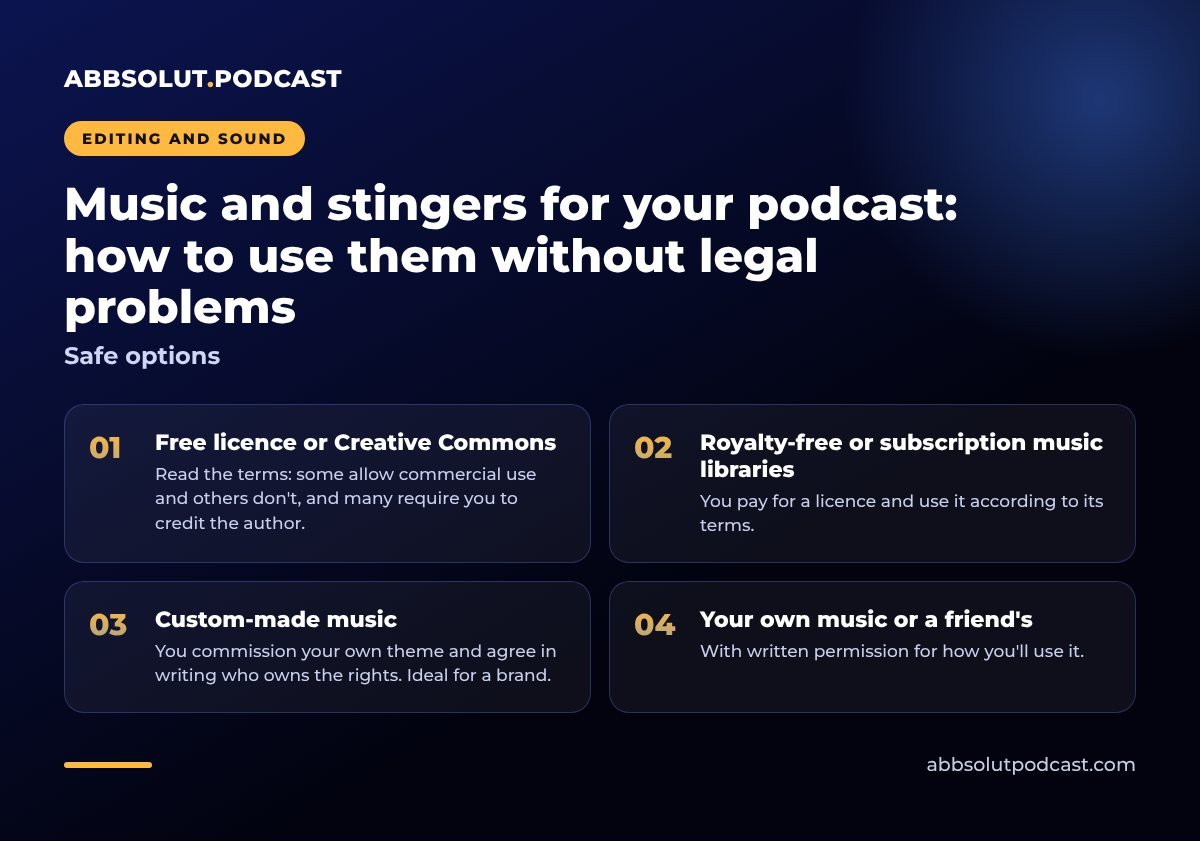
Safe options
- 01
Free licence or Creative Commons
Read the terms: some allow commercial use and others don't, and many require you to credit the author.
- 02
Royalty-free or subscription music libraries
You pay for a licence and use it according to its terms.
- 03
Custom-made music
You commission your own theme and agree in writing who owns the rights. Ideal for a brand.
- 04
Your own music or a friend's
With written permission for how you'll use it.
📌 The key idea
"Royalty-free" doesn't always mean "free with no strings attached". Check the licence agreement. If in doubt, consult an intellectual property professional: this article is for guidance only.
How to choose a good track
Listen to several options and ask yourself these questions.
✅ Before choosing
- Does it reflect the show's personality?
- Can the voice be heard clearly over it without turning the volume right up?
- Does it sound good on a small speaker?
- Is it recognisable without getting tiresome after a hundred listens?
- Does it come in long, short and closing versions?
Avoid melodies that are overused or sound like famous songs. Besides the potential legal problems, they make you less original.
Where to place it in the episode
A simple, effective pattern works for most podcasts.
Basic structure
- 01
Open with music
A few seconds at full volume.
- 02
Fade the music down and bring your voice in
For the introduction.
- 03
Soft music bed
Optional, during the first few sentences.
- 04
Stingers
To separate sections.
- 05
Close with music
Bring the volume up at the end.
Get the balance with the voice right, which we explain in mixing and mastering a podcast. And use clean cuts and fades, as described in our editing guide.
Music and platforms
When you publish, your content may be reviewed, and some systems detect copyrighted music. Keep the paperwork: contracts, invoices or screenshots of the terms. If anyone asks, you'll be able to prove you're authorised to use it.
A useful habit: create a folder for each show with a document where you note down every track, its author, where you got it and its terms of use. Five minutes of organisation now will save you a lot of headaches later.
Music rules can vary from platform to platform, so check them. Before publishing, read how to publish your podcast on Spotify, Apple Podcasts and iVoox.
How much music do you really need?
Not every format needs the same. An interview show can work with just a short intro and outro and no background music. A narrative or documentary show relies on it to create atmosphere and emotion.
If a track doesn't add anything, take it out.
Less music usually means more clarity, more professionalism and less licensing admin.
Common mistakes
- Using your favourite song "just in the background". It's still an infringement.
- Not keeping the licence. Without proof, you can't show you had permission.
- Changing the music every episode. Your show loses its identity and becomes harder to recognise.
- Music that's too loud. It drowns out the voice and wears listeners out.
In short
Define a consistent identity, only use licensed music, keep the paperwork and watch the volume.
🎙️ How we do it at Abbsolut
If you'd like a bespoke theme and a production with clear rights, Abbsolut Podcast can help you create your show's sound identity. We're a podcast production company in Barcelona.
Would you like us to produce your podcast?
We're a podcast production company in Barcelona. Tell us your idea and we'll send you a no-obligation proposal.
Get a quote