A conference costs money: registration, travel, a stand, staff time. Most companies come back with a handful of business cards and a few photos from the photo wall. With a little planning, those two days can become content for the whole quarter.
⚡ In 30 seconds
- Decide before the event which pieces you want and for which channel.
- Interviews with speakers and clients are the most valuable content.
- Publish in three waves: live, the following week and the months after.
- Measure reach, leads generated and content reuse.
Why a conference is a goldmine of content
Experts, clients, press and the latest industry trends all come together in a few square metres. It's the one time of year you can gather so many authoritative voices without booking a single meeting.

Six formats that come out of a conference
Podcast interviews
10- to 15-minute conversations with speakers and clients.
Short vertical clips
30- to 60-second clips for LinkedIn, Instagram and TikTok.
The same question to everyone
An edit of ten different answers to one industry question.
Event recap
A two-minute highlights video capturing the atmosphere and key moments.
Articles and newsletter
Ideas from the talks written up for your website.
Quality photos
Portraits of the guests to accompany each piece.
Before: plan the pieces
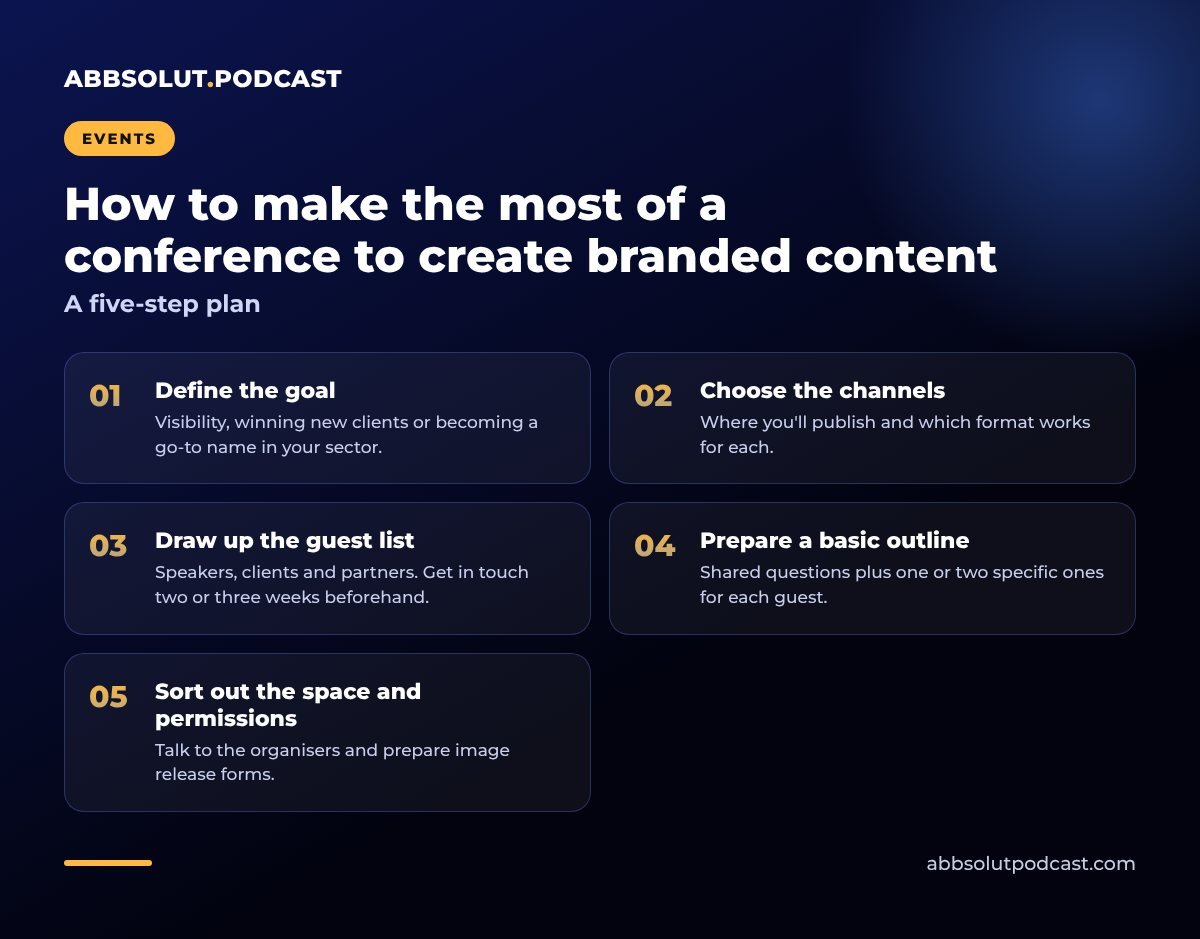
A five-step plan
- 01
Define the goal
Visibility, winning new clients or becoming a go-to name in your sector.
- 02
Choose the channels
Where you'll publish and which format works for each.
- 03
Draw up the guest list
Speakers, clients and partners. Get in touch two or three weeks beforehand.
- 04
Prepare a basic outline
Shared questions plus one or two specific ones for each guest.
- 05
Sort out the space and permissions
Talk to the organisers and prepare image release forms.
For question ideas, see questions for interviewing speakers and experts at an event.
During: record with intent
The most common mistake is recording everything "just in case" and then not knowing what to do with hours of footage. Record with the final piece in mind.
- Good framing and sound for interviews: they're your star content.
- Atmosphere shots: audience, stands, applause, details. They'll save your edit.
- Short, punchy soundbites: ask each guest to sum up their idea in one sentence.
- Someone dedicated to social media, posting live.
Don't come back from the conference with footage. Come back with pieces.
After: publish in waves
| When | What you publish |
|---|---|
| During the event | Stories, photos and the odd quick clip |
| 24-48 hours later | The best clips and the recap |
| The following week | Full podcast episodes |
| The following months | Articles, quotes and repurposed clips |
💡 Tip
Send each guest their clip and link the same day you publish it. If they share it, your reach multiplies.
To get more out of your clips, read how to promote your podcast on social media.
⚠️ Common mistakes
- Improvising the interviews on the day.
- Recording with the camera microphone in a noisy hall.
- Publishing everything at once and then disappearing.
- Forgetting to get image release forms signed.
What to measure
- Reach and views of the published pieces.
- New contacts generated during and after the event.
- Meetings that result from the interviews.
- Content lifespan: how many weeks you keep publishing material from the conference.
🎙️ How we do it at Abbsolut
We plan the pieces with you, set up a podcast studio at the conference, record interviews and atmosphere shots, and deliver clips within 24-48 hours. Find out more in podcasts at events and conferences.
In short
A well-planned conference provides content for months: interviews, clips, recaps and articles. The key is deciding in advance which pieces you want, recording with intent and publishing in waves. If it's your first time, start with podcasts at events and conferences.
Got a conference coming up?
Tell us the date and what you want to achieve, and we'll suggest a no-obligation content plan.
Get a quote